How long do CJC-1295 and ipamorelin take to work? What studies measured vs what users report
The short answer
In studies, the hormone effects are fast: ipamorelin produced one GH pulse peaking about 40 minutes after dosing, and one CJC-1295 (DAC) injection raised GH for six days or more and IGF-1 for 9 to 11 days. No study has measured how long muscle or fat-loss results take. User timelines are anecdotes.
CJC-1295 and ipamorelin
Two peptides that push the pituitary to release more of the body's own growth hormone, through different switches.
- Long-acting analog of growth hormone-releasing hormone (GHRH)
- Selective growth hormone secretagogue acting on the ghrelin receptor
- Injectable peptides
- Small, short studies that measured GH and IGF-I, not muscle
Ask a forum how long CJC-1295 and ipamorelin take to “work” and you will get answers in feelings: better sleep, faster recovery, a leaner look in the mirror. Ask the studies and you get answers in minutes and blood levels: a growth hormone (GH) pulse within the hour, IGF-1 raised for days. Both are describing something real, but they are not describing the same thing, and the gap between them is where most of the confusion about this stack lives. This page puts the two timelines side by side, clearly labeled, so you can see which claims come from a lab and which come from a feed. For what each peptide is and how the pair works, start with our guide to what CJC-1295 and ipamorelin actually do and the hub overview of CJC-1295.
How long does it take to see results from CJC-1295 and ipamorelin?
It depends on what you count as a result. Measured in studies, the hormone response is fast: ipamorelin triggers a single GH pulse that peaks about 40 minutes after dosing (Gobburu et al., 1999), and one injection of CJC-1295 with DAC raised GH for six days or more and IGF-1 for 9 to 11 days (Teichman et al., 2006). How long it takes to see muscle, fat loss or training-recovery changes has never been measured in a human trial of either peptide. Every timeline you read for those outcomes is a personal report, not a study finding.
What are CJC-1295 and ipamorelin, and why does “results” mean two things?
CJC-1295 is a long-acting analog of growth hormone-releasing hormone (GHRH), and ipamorelin is a small peptide that acts on the ghrelin receptor; both prompt the pituitary to release more of the body’s own GH, which raises IGF-1 (Teichman et al., 2006; Gobburu et al., 1999; Beck et al., 2014). People pair them for physique and recovery goals. A study of 23 forum threads about women using CJC-1295 found the reasons centered on “weight loss, muscle enhancement, youthful skin, improved sleep, and injury healing” (Van Hout & Hearne, 2016).
That list explains the two timelines. Researchers measured the first link in the chain, the hormone rise, because it is quick and objective. Users care about the last link, how they look, sleep and recover, which is slow, subjective and shaped by everything else they are doing. The DAC detail matters too: the human trials used CJC-1295 with DAC, while the fitness stack is “typically the non-DAC form” (Dominikowski et al., 2026). Our explainer on CJC-1295 with DAC vs no DAC covers why that changes how far the study timelines carry over.
The timeline side by side: measured in studies vs reported by users
The left column holds only what published studies measured. The right column holds only what our Community Insights summaries of public posts on X found. Read the right column as anecdote, not evidence, and note where a row is simply empty.
| Attribute | Measured in studies | Reported by users |
|---|---|---|
| Hours after a dose | Ipamorelin: one GH pulse peaking at about 0.67 hours, then falling to negligible; half-life about 2 hours (Gobburu 1999) | No timing reported in our sample |
| First days | CJC-1295 with DAC: GH up 2- to 10-fold for 6 days or more and IGF-1 up 1.5- to 3-fold for 9 to 11 days after one injection (Teichman 2006) | Intense flushing early on that later faded (one poster); no other report in our sample gave a day count |
| About one week | CJC-1295 with DAC: trough GH up 7.5-fold, mean GH up 46%, IGF-1 up 45%, with pulses preserved (Ionescu 2006) | Faster recovery reported after continuing through early side effects (one poster), with no week count given |
| About one month | CJC-1295 with DAC: after repeated doses, IGF-1 stayed above baseline for up to 28 days (Teichman 2006) | No week counts attached to any reported result in our sample |
| Several months | Not studied for either peptide. For context, body-composition changes from GH itself (mean 27 weeks) and tesamorelin (26 weeks) were measured over months | Physique transformations with no time frame given, several from posters running many compounds at once |
| Muscle, strength or fat loss in humans | No | Claimed, but not separable from training, diet and other compounds |
How fast do CJC-1295 and ipamorelin raise growth hormone?
Within the first hour for ipamorelin, and over days for CJC-1295 with DAC. In a dose-escalation study of healthy men given a 15-minute intravenous infusion, ipamorelin produced “a single episode of GH release with a peak at 0.67 hours” followed by a decline to negligible GH at every dose, with a terminal half-life of about 2 hours (Gobburu et al., 1999). CJC-1295 with DAC binds albumin in the blood and had an estimated half-life of 5.8 to 8.1 days, so a single injection raised GH for six days or more (Teichman et al., 2006; Ionescu & Frohman, 2006). A week after one injection, GH pulses kept their normal frequency and size while the floor between them rose 7.5-fold (Ionescu & Frohman, 2006).
When does IGF-1 go up on CJC-1295, and how long does it stay up?
IGF-1 rises more slowly than GH and stays up longer. After one injection of CJC-1295 with DAC, mean IGF-1 rose 1.5- to 3-fold for 9 to 11 days, and after repeated doses it stayed above baseline for up to 28 days, with “evidence of a cumulative effect” (Teichman et al., 2006). Those are the longest human timepoints published for CJC-1295, and they describe a blood marker, not a body change. The ipamorelin human studies cited here report GH response and bowel recovery, not an IGF-1 timeline.
Is there a study on how long CJC-1295 and ipamorelin take to build muscle or burn fat?
No. The evidence level for both peptides is small, short human studies, and none measured muscle, strength or fat. The CJC-1295 trials lasted 28 and 49 days and measured GH and IGF-1 (Teichman et al., 2006). The randomized clinical trial of ipamorelin cited here tested bowel recovery after surgery, for up to seven days, and found no significant difference from placebo (Beck et al., 2014). No human trial has tested the two together. A 2026 endocrinology review sums up the field: apart from tesamorelin, the human evidence for these GH-axis peptides “consists predominantly of phase I pharmacokinetic and pharmacodynamic studies in healthy adults, small mechanistic endocrine studies, or paediatric GH-deficiency cohorts” (Dominikowski et al., 2026).
Animal studies add timepoints, with the usual caveat that rodents are not lifters. In mice bred without their own GHRH, five weeks of daily CJC-1295 produced normal body weight, length and body composition, while dosing every two or three days fell short (Alba et al., 2006). In adult female rats, 15 days of ipamorelin increased bone growth rate and body-weight gain without changing total IGF-1 (Johansen et al., 1999).
How long do growth hormone and tesamorelin take to change body composition?
Months, in the trials that measured it, which is the best available context for the question people are really asking. In a systematic review of randomized trials of GH itself in healthy older adults, treatment lasted a mean of 27 weeks and produced about 2.1 kg less fat mass and 2.1 kg more lean mass than no GH (Liu et al., 2007). Tesamorelin, a GHRH analog that is FDA-approved for this one use, cut visceral fat by 15.2% over 26 weeks in people with HIV-associated abdominal fat (Falutz et al., 2007). Neither result transfers directly to CJC-1295 or ipamorelin, but both suggest that a body-composition change driven by the GH axis, when it happens, shows up on a scale of months rather than days. Our recovery sister site makes the same measured-vs-reported split for how long BPC-157 takes to work.
What do users report about CJC-1295 and ipamorelin results, and when?
Mostly quick sensations and slower physique stories, almost never with a week count attached. Our Community Insights summary of 17 public posts on X about CJC-1295, from July 13 to 19, 2026, and 16 about ipamorelin, from July 15 to 16, 2026, found these themes; they are anecdotes, not evidence:
- Side effects are the most concrete reports. One user described intense flushing early on that faded later; another said CJC-1295 wrecked their sleep and left them exhausted with bloodshot eyes. A poster asking about secretagogues including ipamorelin said their own sleep got worse.
- Faster recovery is one reported “it’s working” signal. One poster described recovering with what they called “unprecedented quickness” after continuing through early side effects.
- Physique results are hard to attribute. Several people who reported transformations were also running many other compounds at once, which makes the effect of any one peptide impossible to isolate.
- Detailed accounts are rare. One post noted that most writing on the stack is either a dry clinical summary or vendor material, and rarely describes what running it is actually like; much of the discussion we saw was promotional.
None of the themes in either summary put a number of weeks on a result. The full summaries live on our CJC-1295 community page and the hub’s ipamorelin community page.
Why do user timelines and study timelines disagree?
Because they measure different things, often in different molecules. The studies measured a blood level in healthy volunteers under controlled conditions; a forum post usually reports a feeling, a photo or a lift, from someone who is also training, dieting and sometimes taking other drugs. The forum study of CJC-1295 users found people “well versed and experienced in the poly use of performance and image drug supplementation” (Van Hout & Hearne, 2016), which is exactly the setting where one peptide’s contribution cannot be separated out. And the human data come from CJC-1295 with DAC, while most stack users run the no-DAC form, for which the 2026 review says claims “rest on extrapolation rather than direct human data” (Dominikowski et al., 2026).
What about CJC-1295 and ipamorelin before-and-after photos?
No published study has before-and-after measurements of muscle or fat for either peptide, so every before-and-after photo is a personal report. A photo also cannot show what else changed between the two pictures: training, diet, lighting, other compounds. Since several posters reporting transformations were also running many compounds at once, a photo tells you about the whole program, not about CJC-1295 or ipamorelin. We do not publish before-and-after images; our guide to realistic expectations from GH peptides looks at those claims against measured outcomes.
When do side effects show up?
In the short trials, CJC-1295 with DAC caused “no serious adverse reactions” over 28 to 49 days and was described as “relatively well tolerated” (Teichman et al., 2006). In the post-surgery ipamorelin trial, adverse events were common in both groups of bowel-surgery patients, 87.5% on ipamorelin and 94.8% on placebo, and the authors described ipamorelin as well tolerated (Beck et al., 2014). Longer-term, GH itself in older adults raised the rates of soft tissue swelling, joint pain, carpal tunnel syndrome and breast tissue growth in men, and somewhat raised the likelihood of diabetes and impaired fasting glucose (Liu et al., 2007). No study has followed CJC-1295 or ipamorelin users long enough to say when, or whether, effects like these appear. Users, for their part, report flushing, which one poster said came early on, and sleep changes.
How does the CJC-1295 and ipamorelin timeline compare with other GH-axis options?
The table below lines up the longest human study timepoint for each option and what that study measured. It shows the evidence gap more than it ranks the options.
| Attribute | CJC-1295 with DAC | Ipamorelin | Tesamorelin | Growth hormone |
|---|---|---|---|---|
| Longest human study cited here | 49 days (Teichman 2006) | Up to 7 days after surgery (Beck 2014) | 26 weeks (Falutz 2007) | Mean 27 weeks across trials (Liu 2007) |
| What it measured | GH and IGF-1 | Recovery of bowel function | Visceral fat, lipids, IGF-1 | Fat mass, lean mass, side effects |
| Body-composition change shown in humans | No | No | Yes | Yes |
| Evidence level in words | Small, short pharmacology trials | A human PK study and one clinical trial that missed its goal | A large randomized trial, approved drug for one use | Randomized trials in older adults |
What does the timeline mean for cost?
It means a short run is long enough to see the hormone response but, going by every GH-axis trial that did measure body composition, short of the months over which those changes were measured (Liu et al., 2007; Falutz et al., 2007). There is no CJC-1295 or ipamorelin study that defines a “results” period, so any program length, and its total cost, is set by sellers and users rather than by evidence. If you are weighing the cost, weigh it against what has actually been measured: a hormone rise in days, and outcomes nobody has tested.
So, how long do CJC-1295 and ipamorelin take to work?
The honest answer has two labeled halves. Measured: GH rises within about 40 minutes of ipamorelin and stays raised for days after CJC-1295 with DAC, and IGF-1 stayed up for 9 to 11 days after one injection and for up to 28 days with repeated doses. Reported: people describe flushing early on, sleep changes, faster recovery after continuing through early side effects, and physique changes that are hard to credit to either peptide. Nobody has measured the part most people mean by “results.” If you are tracking it yourself, the measurable markers are lab values a clinician can order, which beats a mirror or a forum timeline. For the full stack picture, see what CJC-1295 and ipamorelin actually do.
Status: CJC-1295 and ipamorelin are not FDA-approved; sold by some telehealth providers as a compounded prescription. What this status means.
Educational information only, not medical advice. Every efficacy and safety statement on this page is sourced to the peer-reviewed literature linked above; the community summaries reflect public posts on X analyzed in July 2026. Updated October 12, 2026. This page is drafted with AI assistance and fact-checked against the cited primary sources before publication.
Sources (10)
Advertising disclosure: links marked "Paid link" go to Bodybuilding Peptides (trybbpeptides.com), an affiliate destination, and Recomp Lab may earn a commission if you buy there. Our coverage is independent of that relationship, and nothing on this page is medical or legal advice.
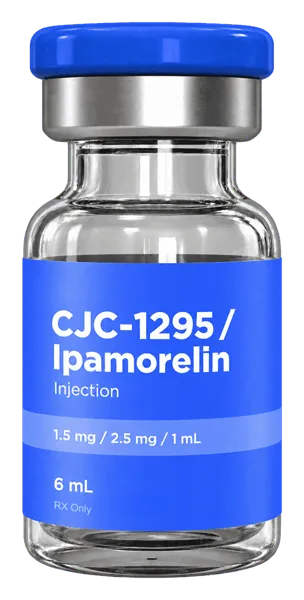 See it at Bodybuilding Peptides