Growth hormone peptides for physique: what they do, and what the evidence shows
The short answer
Growth hormone peptides such as CJC-1295 and ipamorelin prompt the pituitary to release more of the body's own growth hormone, and lifters use them hoping for more muscle, less fat and faster recovery. The physique case is weak. The most rigorous human evidence on growth hormone itself found it adds about 2 kg of lean mass, much of it likely fluid, without improving strength, while raising side-effect rates such as swelling and fatigue. The two peptides have small human trials showing they raise growth hormone and IGF-1, but no published trial showing they build muscle or strength.
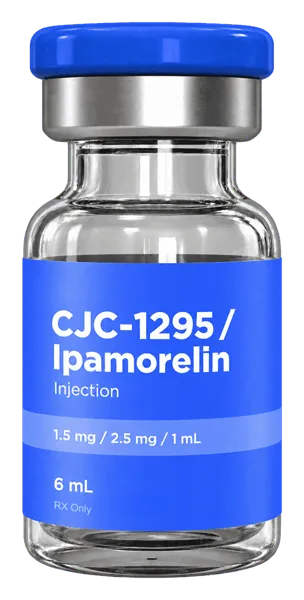
CJC-1295 and ipamorelin
Two peptides that push the pituitary to release more of the body's own growth hormone, through different switches.
- Long-acting analog of growth hormone-releasing hormone (GHRH)
- Selective growth hormone secretagogue acting on the ghrelin receptor
- Injectable peptides
- Small, short studies that measured GH and IGF-I, not muscle
In short: growth hormone peptides such as CJC-1295 and ipamorelin are marketed to lifters as a softer, smarter way to raise growth hormone for size and recovery. The honest picture is narrower than the pitch. The strongest human evidence on growth hormone itself shows it changes body composition on paper without making people stronger, and it raises side-effect rates; the two peptides have small human trials showing they raise hormone levels, but almost no human physique data of their own. This page lays out what the compounds do, why lifters reach for them, what the research actually supports, what people running them report, and which levers have stronger evidence for a recomposition goal.
What growth hormone peptides like CJC-1295 and ipamorelin actually do
Growth hormone peptides work indirectly, which is the detail that makes them sound appealing and also limits what anyone can promise. Instead of injecting growth hormone, they prompt the pituitary to release more of its own. CJC-1295 is a long-acting analog of growth-hormone-releasing hormone (GHRH); in the published human pharmacology study, a single subcutaneous dose produced dose-dependent rises in growth hormone of roughly 2- to 10-fold for six days or more and in IGF-1 of about 1.5- to 3-fold for nine to eleven days, reflecting a half-life of roughly a week. Ipamorelin is a selective growth hormone secretagogue that mimics ghrelin to trigger a growth hormone pulse without much effect on cortisol or prolactin. In practice the two are often stacked because they push the same system through two different doors. What matters for a physique reader is the gap between mechanism and outcome: showing that a compound moves a hormone in the blood is not the same as showing it changes the mirror, the scale, or a one-rep max. The rest of this page is about that gap. Our pillar on what CJC-1295 and ipamorelin actually do goes deeper on the mechanism.
Why do lifters use growth hormone peptides?
Lifters use growth hormone peptides because growth hormone has an anabolic reputation, and the peptides promise a piece of it without injecting the hormone itself. The goals people describe are recovery between sessions, holding muscle while cutting, leaner body composition, and better sleep. The appeal of the peptide route specifically is the idea that prompting your own pituitary is gentler and more “natural” than replacing the hormone outright. Each of those is a reasonable thing to want, and each is also a claim about outcomes, which is exactly what the next two sections test. For the wider list of compounds lifters reach for, ranked by how much human evidence sits behind each, see our guide to peptides for muscle growth.
Do growth hormone peptides build muscle or make you stronger?
Growth hormone reliably nudges body composition on paper, yet the best evidence shows it does not make healthy people stronger. This is the fact most physique marketing leaves out, and it comes from the most complete review of the question: a systematic review in the Annals of Internal Medicine pooling 27 randomized studies of growth hormone in healthy, mostly young adults. It found that growth hormone increased lean body mass by about 2.1 kilograms versus controls, but produced no statistically significant improvement in strength and did not improve exercise capacity, with signals that it may actually impair it. Part of that lean-mass gain also likely reflects fluid rather than new contractile muscle, a caveat that fits the soft-tissue swelling the same review recorded as one of its most common effects. And the trade was not free: the reviewers recorded a higher rate of adverse events on growth hormone, notably soft-tissue swelling in 44% versus 1% of controls and fatigue in 35% versus 0%. Growth hormone peptides are a step removed from injected growth hormone, so they raise the same hormones by a smaller, less controllable amount, which makes the physique case weaker, not stronger. If a source promises visible muscle from raising your growth hormone, it is promising past where the evidence stops. For the fuller picture of what these peptides realistically deliver and the side effects reported across the growth hormone literature, see our companion on realistic expectations and side effects for GH peptides.
Where the human data on CJC-1295 and ipamorelin stops
The human data on CJC-1295 and ipamorelin is thin, and none of it was ever about building a better physique. For CJC-1295, the 2006 healthy-adult study was a small pharmacology and safety trial that measured hormone levels and reported no serious adverse reactions over a few weeks; it did not measure muscle mass, strength, fat loss, or any body-composition endpoint, and no larger physique trial has replaced it. Ipamorelin’s most rigorous human test was in a completely different setting: a randomized, placebo-controlled, proof-of-concept trial of intravenous ipamorelin for postoperative ileus in bowel-resection patients, which found no significant difference from placebo on its primary endpoint, the time to first tolerated meal. In other words, the marquee human trial of ipamorelin was a negative result for a gut indication, not a win for lifters. There is no completed randomized trial showing that either peptide adds muscle or strength in healthy trainees. That does not make them fringe chemistry, but it does mean the confident physique claims around them are running well ahead of the science. Our comparison of growth hormone peptides versus anabolic steroids puts the evidence and risk side by side, and tesamorelin vs sermorelin covers two GHRH analogs, one of them an FDA-approved drug.
Growth hormone peptides for physique at a glance
CJC-1295, ipamorelin, and growth hormone itself sit in three slightly different places on evidence, and none has shown a strength gain in healthy people. The table summarizes what the cited human research measured and the side effects it recorded.
| Compound | Human physique evidence | Side effects recorded in the cited human research |
|---|---|---|
| CJC-1295 (GHRH analog) | Small human pharmacology trials; hormone levels only, no body-composition endpoints; no physique trials | No serious adverse reactions over a few weeks in healthy adults; long-term effects not studied |
| Ipamorelin (GH secretagogue) | Marquee human trial was a negative postoperative-ileus study; no completed physique trials | Studied in hospital patients for a gut indication; long-term effects in lifters not studied |
| Growth hormone itself | Adds ~2.1 kg lean mass (much of it likely fluid) with no strength gain and more side effects, per pooled trials | Soft-tissue swelling in 44% vs 1% of controls; fatigue in 35% vs 0%, per the pooled review |
What lifters are saying about growth hormone peptides
In public posts, growth hormone peptides are discussed as a recovery and body-composition tool, with frequent side-effect reports and debate about form and timing. Our Community Insights summaries of public posts on X (17 posts on CJC-1295 from July 13 to 19, 2026, and 16 on ipamorelin from July 15 to 16, 2026) found these recurring themes; they are anecdotes, not evidence:
- Recovery reports. Some posters describe faster recovery between sessions, but several of those reporting physique changes were running many compounds at once, so no single peptide’s effect can be isolated.
- Pulses versus replacement. A common argument is that secretagogues prompt the body’s own GH pulses rather than replacing the hormone, which posters see as a reason to prefer them over injected GH. That is reasoning, not a measured outcome.
- Side effects. Reports include facial flushing, disrupted sleep and bloodshot eyes, along with recurring worry about insulin resistance and high IGF-1, though posters disagree about how serious those risks are.
The side effects people describe fit what raising growth hormone is known to do. The muscle and recovery results are the part no controlled human trial of these peptides has measured.
Preserving muscle on a GLP-1: a better-studied option
If the real goal is holding onto muscle while you lose fat, the better-studied levers in 2026 are not growth hormone peptides at all. A growing number of lifters come to these peptides while cutting, worried about losing size. The approach with a much larger evidence base is a physician-managed weight medication paired with the two habits that actually protect lean mass during weight loss: adequate protein and progressive resistance training. Branded GLP-1 medications such as Wegovy and Zepbound are FDA-approved for chronic weight management and have large clinical trials behind them, which is exactly what CJC-1295 and ipamorelin lack for body composition. Our sister publication Modern Weight Medicine covers the body-composition evidence in depth, including how to keep muscle while losing weight on a GLP-1 and how branded GLP-1 care actually works online. Our cluster on keeping muscle on a GLP-1 covers the training and protein specifics.
Why product quality matters for injected peptides
Product quality is the risk that no dosing discussion captures: an injected peptide is only as safe as the way it was made and tested. A vial labeled “research use only” is sold for laboratory work and is not held to the sterility, potency and purity standards of a finished medicine, so its contents are only as good as the seller’s testing. Even compounded medicines prepared by licensed pharmacies are drugs the FDA has not reviewed for safety, effectiveness, or quality before they are marketed, and the agency notes that a compounded drug which is contaminated or contains too much active ingredient can cause serious harm. Whatever the source, the useful questions are the same: who made it, whether it was tested for identity, potency and sterility, and whether a clinician is monitoring you while you use it.
How this page is sourced
Every factual claim on this page traces to a primary source rather than a customer testimonial, because in health content the honest proof is citations and dated facts, not before-and-after photos. The physique reality for growth hormone comes from a pooled systematic review of randomized trials, not a clinic’s marketing. The CJC-1295 hormone data come from the published 2006 human study, and the ipamorelin result from its randomized postoperative-ileus trial. The community themes come from our Community Insights summaries of public posts on X, labeled as anecdotes. This piece is drafted with AI assistance and fact-checked against its cited primary sources, and it was last updated on October 12, 2026.
The honest next step for a physique goal
If your underlying goal is a leaner, more muscular physique, the honest next step is to weigh any growth hormone peptide against what it has actually shown: raised hormone levels, no measured muscle or strength gain, and short-term safety data only. A licensed provider can look at where you actually are (your training, your labs, your body composition, and your objective) and talk through the options that fit, which may be a very different approach from the one a forum pointed you toward. To make the first conversation easier, we put the questions from this guide into a free, one-page checklist you can bring to any provider.
Status (CJC-1295 and ipamorelin): Not FDA-approved; sold by some telehealth providers as a compounded prescription. What this status means.
Educational information only, not medical advice. Every evidence statement on this page is sourced to the primary documents linked above; the community summary reflects public posts on X analyzed in July 2026. Updated October 12, 2026.
Sources (5)
Advertising disclosure: links marked "Paid link" go to Bodybuilding Peptides (trybbpeptides.com), an affiliate destination, and Recomp Lab may earn a commission if you buy there. Our coverage is independent of that relationship, and nothing on this page is medical or legal advice.
 See it at Bodybuilding Peptides