CJC-1295 and ipamorelin: what they are and what the research shows
The short answer
CJC-1295 is a long-acting analog of growth hormone-releasing hormone (GHRH), and ipamorelin is a selective growth hormone secretagogue that acts on the ghrelin receptor. Both push the pituitary to release more of the body's own growth hormone, which is why lifters stack them for recovery and body composition. The human evidence is thin and narrow: the published CJC-1295 studies are small, short pharmacology trials that measured rises in growth hormone and IGF-I, not muscle, strength, or body composition, and ipamorelin's only completed human randomized trial (for post-surgery bowel recovery) failed to beat placebo. Both are banned in tested sport at all times.
CJC-1295 and ipamorelin
Two peptides that push the pituitary to release more of the body's own growth hormone, through different switches.
- Long-acting analog of growth hormone-releasing hormone (GHRH)
- Selective growth hormone secretagogue acting on the ghrelin receptor
- Injectable peptides
- Small, short studies that measured GH and IGF-I, not muscle
If you lift and you have spent any time in physique forums, you have seen “CJC-1295 and ipamorelin” recommended as a growth-hormone stack that will supposedly add muscle, strip fat, and speed recovery while you sleep. This page is a straight read of what those two peptides actually are, why lifters pair them, and what the published science does, and does not, show. The short version is that the mechanism is real and interesting, the human evidence is far smaller and narrower than the marketing implies, and the side-effect and product-quality questions deserve more attention than they get. Here is the whole picture, sourced to the primary literature, plus a summary of what people running the stack are saying.
What are CJC-1295 and ipamorelin?
CJC-1295 and ipamorelin are two different synthetic peptides that both increase the body’s own release of growth hormone (GH), which is why they are usually discussed as a pair. CJC-1295 is a long-acting analog of growth hormone-releasing hormone, the natural hypothalamic signal, abbreviated GHRH, that tells the pituitary gland to secrete GH (Teichman et al., 2006). Ipamorelin is a small five-amino-acid peptide (a pentapeptide) that belongs to a different class called growth hormone secretagogues; it mimics the hormone ghrelin at its receptor to trigger a separate GH-release pathway (Raun et al., 1998). Neither is a steroid, neither is growth hormone itself, and neither is an approved medicine for building muscle.
A crucial detail the forums usually blur is that “CJC-1295” refers to more than one molecule. The version studied in the published human trials is a long-acting form built with a “drug affinity complex” (often written CJC-1295 with DAC) that binds to blood proteins and lingers for days. The form most often sold and injected in the community is a shorter-acting variant without that complex, frequently labeled “modified GRF 1-29” or “CJC-1295 without DAC.” They are not interchangeable, and, as the sections below show, the human data you can actually cite were generated with the long-acting version, not the one most people use. Our page on CJC-1295 with DAC vs no DAC explains what the add-on changes.
Why do lifters use CJC-1295 and ipamorelin together?
Lifters use the pair because it promises a bigger growth-hormone pulse from two directions at once, and they want that pulse for recovery, sleep, and body composition. The goals people describe are the familiar physique ones: recovering faster between sessions, holding muscle while leaning out, and a general sense that more GH overnight means better results from the same training. The stack is also popular because it is framed as a gentler alternative to injecting growth hormone itself, since the peptides prompt the body’s own release rather than replacing it. Those motives are understandable, but each one is a claim about outcomes, and the rest of this page checks those claims against what has actually been measured.
How do CJC-1295 and ipamorelin work?
CJC-1295 and ipamorelin raise growth hormone through two distinct receptors, which is the pharmacological rationale for stacking them. CJC-1295 works on the GHRH receptor: as a GHRH analog it does what the body’s own releasing hormone does, but for far longer, producing a sustained “keep releasing GH” signal to the pituitary (Teichman et al., 2006). Ipamorelin works on the growth hormone secretagogue receptor (the ghrelin receptor), a separate switch that also drives GH release; it was developed as a synthetic ghrelin mimetic in the same family as the older peptides GHRP-2 and GHRP-6 (Raun et al., 1998). Because the two act on different receptors, the theory is that using them together produces a larger, more physiological GH pulse than either alone. That theory is biologically reasonable, but note what it is: a mechanistic rationale, not a demonstrated body-composition result.
The feature that made ipamorelin notable in its original research was selectivity. Earlier ghrelin-mimetic peptides such as GHRP-6 tended to raise other hormones alongside GH, stress hormones and others. Ipamorelin did not: in the founding study it released GH strongly but, in the authors’ words, “did not release ACTH or cortisol in levels significantly different from those observed following GHRH stimulation,” a selectivity they reported held “even at doses more than 200-fold higher than the ED50 for GH release.” It also left prolactin, thyroid-stimulating hormone, and the reproductive hormones LH and FSH unchanged in swine (Raun et al., 1998). The authors described it as “the first GHRP-receptor agonist with a selectivity for GH release similar to that displayed by GHRH.” That clean profile is exactly why ipamorelin, rather than the older GHRPs, became the community’s preferred pairing partner for CJC-1295.
Growth hormone itself then drives the liver and other tissues to produce insulin-like growth factor 1 (IGF-I), which is the downstream messenger responsible for much of GH’s anabolic reputation. So the full chain the stack is aiming at is: peptide, then pituitary GH release, then IGF-I. Every human study below measured points along that hormonal chain. None of them measured whether the chain ends in more muscle, and that gap is the single most important thing to hold onto.
What does the human research on CJC-1295 actually show?
The published human research on CJC-1295 is small, short, and about hormone levels rather than physique; the evidence level is best described as small human pharmacology trials. Two randomized, placebo-controlled, double-blind trials in healthy adults aged 21 to 61, lasting 28 and 49 days, are the core of it. After a single subcutaneous injection of the long-acting CJC-1295 there were “dose-dependent increases in mean plasma GH concentrations by 2- to 10-fold for 6 [days] or more” and IGF-I rose “by 1.5- to 3-fold for 9-11 [days],” with an unusually long half-life of roughly 6 to 8 days; the authors concluded it “resulted in sustained, dose-dependent increases in GH and IGF-I levels in healthy adults and was safe and relatively well tolerated” at the studied doses (Teichman et al., 2006). That is a genuine, replicated pharmacology finding: the drug does raise the hormones it is supposed to raise.
A second study looked at whether that continuous GHRH-style stimulation would flatten the body’s natural GH rhythm, a real concern, since GH is normally released in pulses. It found the opposite: pulsatile GH secretion persisted, and “CJC-1295 increased trough and mean GH secretion and IGF-I production with preserved GH pulsatility” (Ionescu & Frohman, 2006). Reassuring, again, at the level of hormone dynamics. But read both studies for what they are: a few dozen healthy volunteers, measured over days to weeks, with hormone assays as the endpoint. There is no published randomized trial testing whether CJC-1295 increases lean mass, strength, fat loss, or recovery in humans, the outcomes lifters actually care about. The honest summary is that CJC-1295 reliably raises GH and IGF-I on paper, and everything beyond that is extrapolation. How fast those hormone changes appear, and why no study gives a timeline for muscle, is covered in how long CJC-1295 and ipamorelin take to work.
What does the research on ipamorelin show?
Ipamorelin’s research base is even thinner in humans, and its one completed clinical trial did not succeed; outside that trial the evidence is animal and cell work. The founding 1998 work established the pharmacology in animals and cell cultures: ipamorelin was a potent, selective GH releaser in rat pituitary cells, anaesthetized rats, and conscious swine, and it was flagged as “a very interesting candidate for future clinical development” (Raun et al., 1998). That candidacy was eventually tested, but not for muscle. Because GH secretagogues affect gut motility, ipamorelin was advanced into a Phase 2 randomized, placebo-controlled trial for postoperative ileus, the temporary shutdown of bowel function after abdominal surgery.
That trial, in 114 patients, missed its mark. Median time to first tolerated meal was 25.3 hours with ipamorelin versus 32.6 hours with placebo, a difference that was not statistically significant (p = 0.15), and the authors reported “no significant differences between ipamorelin and placebo in the key and secondary efficacy analyses,” though the drug was well tolerated (Beck et al., 2014). No further trial of ipamorelin for that indication has since been published. There is, as with CJC-1295, no published human trial evaluating ipamorelin for muscle growth, body recomposition, or athletic recovery. So the peptide with the cleanest pharmacological profile in its class has exactly one completed human efficacy trial on the books, and it came back negative.
Do CJC-1295 and ipamorelin build muscle or improve body composition?
There is no controlled human evidence that CJC-1295 or ipamorelin builds muscle or improves body composition, because no such trial has been published. This is the claim the entire stack is marketed on, and it is the one with the least support. What the human studies established is that these peptides raise growth hormone and IGF-I, biomarkers, not outcomes (Teichman et al., 2006; Ionescu & Frohman, 2006). Higher IGF-I is plausibly linked to tissue growth, which is why the marketing feels intuitive. But “a hormone that is associated with growth went up” is a different, weaker statement than “people who took this gained measurable muscle or lost measurable fat in a controlled comparison.” The second statement has not been tested for these peptides in humans.
This distinction matters practically, not just academically. Even in the study of adult growth-hormone therapy itself, actual GH, not a peptide that nudges your own GH, the effects on lean mass have often come with fluid shifts and side effects, and benefits for healthy, well-trained athletes have been hard to demonstrate. Extrapolating from “IGF-I rose for a week in healthy volunteers” all the way to “this will change your physique” skips every step that a real efficacy trial exists to check: dose, duration, training status, diet, and whether any hormonal change translates into contractile muscle rather than water. Until those trials are run and published, anyone stating a body-composition benefit as fact is selling ahead of the evidence. Our page on realistic expectations and side effects for GH peptides walks through the growth-hormone data in detail, and our guide to peptides for muscle growth sets this stack beside the other compounds lifters use.
Does CJC-1295 and ipamorelin affect testosterone?
There is no good evidence either way in humans, and the little that exists points away from a direct effect. Testosterone production is driven by the pituitary hormones LH and FSH, and in the founding ipamorelin research, none of the growth hormone secretagogues tested, ipamorelin included, changed LH or FSH levels in swine (Raun et al., 1998). That is an animal finding, not a human one. The human CJC-1295 trials listed GH and IGF-I as their main outcome measures (Teichman et al., 2006), so they do not answer the testosterone question at all. The fair reading is that neither peptide is designed to act on the testosterone axis and no human study has shown that it does, which is also why stacking them is a separate question from testosterone therapy; our page on peptides while on TRT covers that combination.
CJC-1295 vs ipamorelin at a glance
The table below lays out how the two peptides differ across the dimensions that actually matter: mechanism, what was studied, and their status in tested sport. Read it as a map of where each one sits, not as a recommendation to use either. Our dedicated head-to-head on CJC-1295 vs ipamorelin walks through each of these rows, including why the two are so often combined rather than chosen between, in more depth.
| Attribute | CJC-1295 | Ipamorelin |
|---|---|---|
| Peptide class | Long-acting GHRH analog (GH-releasing hormone) | Growth hormone secretagogue (ghrelin mimetic / pentapeptide) |
| Receptor acted on | GHRH receptor | Growth hormone secretagogue (ghrelin) receptor |
| Duration of action | Long: ~6-8 day half-life for the studied DAC form | Short-acting; drives a pulse of GH release |
| Selectivity signal in research | Raises GH and IGF-I; pulsatility preserved in one study | Raises GH without elevating ACTH, cortisol, prolactin, or TSH (animal data) |
| Human studies | Two small placebo-controlled pharmacology trials (hormone levels) | One completed Phase 2 trial (postoperative ileus), did not beat placebo |
| Human muscle / body-composition trials | None published | None published |
| FDA approval | Not approved for any use | Not approved for any use |
| WADA status (sport) | Prohibited at all times (S2) | Prohibited at all times (S2) |
Are CJC-1295 and ipamorelin allowed in sport?
No, both are prohibited for competitive athletes under the World Anti-Doping Agency (WADA) code, and the ban applies at all times, in and out of competition. WADA’s Prohibited List places growth hormone-releasing factors and growth hormone secretagogues together in category S2. CJC-1295, as a GHRH analog, is “explicitly listed as a prohibited substance on the WADA Prohibited List (Section S2.2.4) as a growth hormone releasing factor,” and “the prohibition applies at all times, both during and outside of competition” (BSCG). Ipamorelin falls in the same S2 section as a named growth hormone secretagogue, alongside the other ghrelin mimetics (WADA Prohibited List). Because S2 substances are banned out of competition as well, an athlete cannot “cycle off” before a test to stay clear. If you compete under an anti-doping code or serve in a drug-tested unit, both peptides are disqualifying regardless of what any protocol promises. PeptideAgent’s profile of the CJC-1295 and ipamorelin pairing flags the same ban for tested athletes and adds that no published study has tested the two as a combination.
What are the downsides and side effects of CJC-1295 and ipamorelin?
The biggest downside is that human safety has barely been studied, and never over the timeframes people actually use these peptides. In the trials that exist, both were described as reasonably well tolerated: CJC-1295 produced no serious adverse reactions and was “safe and relatively well tolerated” at the tested doses (Teichman et al., 2006), and ipamorelin was well tolerated in its Phase 2 trial (Beck et al., 2014). But those were small groups followed for days to weeks, not months or years of repeated dosing, and short-term tolerability in a monitored trial is not a long-term safety profile. Anything you read presenting these peptides as “side-effect-free” is overreading a handful of brief studies. For what each small study recorded, set against what users report, see CJC-1295 and ipamorelin side effects.
There are also predictable concerns that follow from the mechanism itself. Sustained elevation of GH and IGF-I is not automatically benign: the known side effects of raising GH activity include fluid retention, joint aches, carpal-tunnel-type symptoms, and effects on insulin sensitivity and blood sugar, and the long-term consequences of chronically nudging IGF-I upward in otherwise healthy people have not been characterized for these peptides.
A second, separate risk is what is actually in the vial. Peptides sold online as “research use only” are not made to pharmaceutical standards, and independent laboratory analysis of the falsified peptide drugs most frequently encountered on one national market documented exactly this class of problem: “a high variation in amount of drugs per unit,” “a low purity (ranging between 5% and 75% for cysteine containing peptides),” and contamination with toxic elements, arsenic across multiple samples at levels “up to ten times the ICH toxicity limit for parenteral drugs,” and lead in at least one sample (Janvier et al., 2018). For a substance injected regularly, where it comes from and how it was made matter as much as the molecule itself.
What the community is saying about CJC-1295 and ipamorelin
On social media, the stack is discussed mostly as a recovery and body-composition tool, with a steady undercurrent of side-effect reports and argument over which CJC-1295 form to use. Our Community Insights summary for this site analyzed 17 public posts on X from July 13 to 19, 2026, and the themes below summarize that discussion; they are anecdotes, not evidence.
- Recovery and physique. Some posters report faster recovery between sessions, one describing recovering with “unprecedented quickness” after pushing through early side effects. Several of the people reporting physique transformations were also running many other compounds at once, which makes any single peptide’s effect impossible to isolate.
- The stack itself. Commenters repeatedly name CJC-1295 plus ipamorelin as a go-to growth-hormone combination, and one notes that most writing on it is either a dry clinical summary or vendor copy, rarely a first-hand account of what running it is like.
- Side effects. Reported effects include intense facial flushing early on, disrupted sleep, and bloodshot eyes with fatigue. Some posters cite trial data noting mostly mild adverse events.
- DAC versus no DAC. People treat the two forms as effectively different peptides and disagree about which is preferable; some favor DAC for convenience and cost, while others worry that its continuous GH elevation could bring insulin resistance.
- Timing claims. One circulating claim holds that taking CJC-1295 on an empty stomach matters more than the dose, because food and insulin may blunt the GH pulse. No trial has tested that claim for these peptides.
Set against the research above, the community picture lines up in one place and diverges in another. The side effects people describe (flushing, sleep changes, concerns about insulin) are consistent with what raising GH is known to do. The recovery and physique results are the part no controlled human study has measured, so they remain reports, not findings.
What this means if muscle, recovery, or body composition is your goal
If your real goal is more muscle, better recovery, or a leaner body composition, the useful move is to weigh the stack on what it has actually shown rather than on the loudest testimonial. As this page has shown, the CJC-1295 and ipamorelin story is genuinely interesting at the level of mechanism and genuinely thin at the level of human proof: the studies measured hormones, not physiques; ipamorelin’s one completed human trial missed its endpoint; the side-effect data are short-term; and both are banned in tested sport. Those are the facts a good decision starts from, and a licensed clinician who knows your labs and history is the right person to weigh them with you.
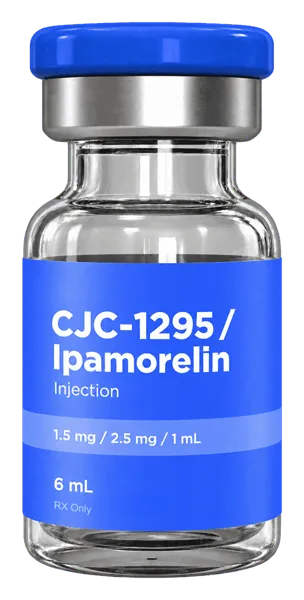
Status (CJC-1295 and ipamorelin): Not FDA-approved; sold by some telehealth providers as a compounded prescription. What this status means.
Educational information only, not medical advice. Every efficacy and safety statement on this page is sourced to the peer-reviewed literature linked above, and every anti-doping statement to WADA-aligned documents; the community summary reflects public posts on X analyzed July 13 to 19, 2026. Updated October 12, 2026. This page is drafted with AI assistance and fact-checked against the cited primary sources before publication.
Sources (7)
Advertising disclosure: links marked "Paid link" go to Bodybuilding Peptides (trybbpeptides.com), an affiliate destination, and Recomp Lab may earn a commission if you buy there. Our coverage is independent of that relationship, and nothing on this page is medical or legal advice.
 See it at Bodybuilding Peptides