Peptides for muscle growth: what lifters actually use, ranked by the evidence
The short answer
No peptide has been shown in a controlled trial to build muscle in healthy, trained lifters. The best human data are indirect: tesamorelin and MK-677 raised lean or fat-free mass by about 1 kg in patient or older-adult trials without measured strength gains, while CJC-1295 and ipamorelin studies only measured hormone levels such as GH and IGF-1.
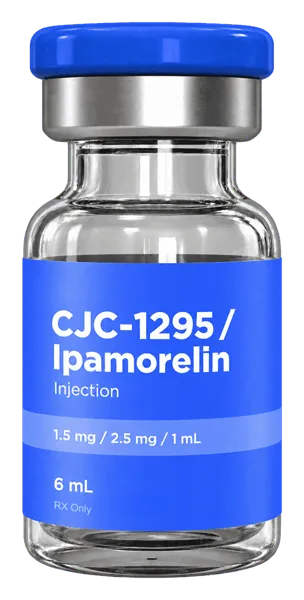
CJC-1295 and ipamorelin
Two peptides that push the pituitary to release more of the body's own growth hormone, through different switches.
- Long-acting analog of growth hormone-releasing hormone (GHRH)
- Selective growth hormone secretagogue acting on the ghrelin receptor
- Injectable peptides
- Small, short studies that measured GH and IGF-I, not muscle
Walk into any serious gym and you will hear that peptides build muscle, usually as a growth hormone stack talked about like a supplement. This guide takes that gym-floor claim apart compound by compound. For each peptide lifters actually use, it asks one plain question: what did the human studies measure? The answer is mostly growth hormone (GH) and its downstream messenger IGF-1, sometimes lean mass in patients or older adults, and almost never muscle size or strength in healthy people who train. Every research statement below links to its primary source, and the community section is kept separate from the evidence so the two are easy to tell apart.
What are peptides for muscle growth?
“Peptides for muscle growth” is gym shorthand for a handful of compounds that raise the body’s own growth hormone, plus a few repair-themed peptides used for recovery. A peptide is a short chain of amino acids, smaller than a protein. The muscle-themed ones mostly work on the pituitary gland: some mimic growth hormone-releasing hormone (GHRH), the brain’s natural “release GH” signal, and others mimic ghrelin, a gut hormone that also triggers GH release. More GH then raises IGF-1, the downstream messenger that carries much of growth hormone’s anabolic reputation; the CJC-1295 trials measured exactly that two-step rise (Teichman et al., 2006). That chain, peptide to GH to IGF-1, is the whole theory behind the category, and it is worth holding onto because most of the research stops partway along it.
Two compounds that ride in the same conversation are not what their reputation says. MK-677 (ibutamoren) is discussed as an “oral peptide,” but its own early trial describes it as a “nonpeptide” compound (Murphy et al., 1998), and its longest trial calls it an oral ghrelin mimetic (Nass et al., 2008). And none of these compounds is an anabolic steroid; they act on the growth hormone axis, not the androgen receptor. Our page on GH peptides versus anabolic steroids covers that difference in depth.
What peptides do bodybuilders use for muscle?
Lifters mainly use four groups: GHRH analogs, ghrelin mimetics, the oral secretagogue MK-677, and repair peptides for recovery. The names you will hear most are these.
- CJC-1295 and ipamorelin. The most talked-about pairing. CJC-1295 is a long-acting GHRH analog, and ipamorelin is a five-amino-acid ghrelin mimetic; together they push GH release through two different receptors (Raun et al., 1998). Our explainer on what CJC-1295 and ipamorelin do covers each one in detail.
- Tesamorelin. A GHRH analog that is an approved prescription drug (Egrifta) for one narrow use: reducing excess abdominal fat in adults with HIV-associated lipodystrophy (Egrifta WR label). Lifters use it off-label for leanness.
- MK-677 (ibutamoren). A daily oral ghrelin mimetic, popular because it needs no injection.
- Older GH-releasing peptides. GHRP-2, GHRP-6 and hexarelin. In the animal research that introduced ipamorelin, GHRP-2 and GHRP-6 also raised the stress hormones ACTH and cortisol, while ipamorelin did not (Raun et al., 1998).
- BPC-157 and TB-500. Not muscle builders in theory, but widely used for the “recovery” half of the goal, mainly for tendon, ligament and muscle injuries.
The goals people name are consistent: more muscle while staying lean, faster recovery between sessions, better sleep, and a gentler alternative to injecting growth hormone itself. Our overview of growth hormone peptides for physique covers why GH-axis compounds became the default.
Do peptides really work for muscle building?
The honest answer is that it has not been tested in the people asking. We found no published randomized trial that measured whether CJC-1295, ipamorelin, tesamorelin or MK-677 adds muscle or strength in healthy, resistance-trained adults. What exists sits on three rungs of evidence, from weakest to strongest:
- Hormone-only studies. Small, short trials in healthy volunteers that measured GH and IGF-1 and nothing about muscle. This is where CJC-1295 sits (Teichman et al., 2006).
- Body-composition trials in other populations. Larger, longer trials that measured lean or fat-free mass, but in patients or older adults rather than lifters. Tesamorelin and MK-677 sit here.
- The growth hormone ceiling. Trials of actual growth hormone in fit young adults, which show what the end of the chain can and cannot do.
That third rung matters most, because it sets an upper limit. A systematic review of 27 study samples in young, lean, physically fit adults found that growth hormone increased lean body mass by about 2.1 kg compared with no treatment, “but strength and exercise capacity did not seem to improve,” and treated participants more often had soft tissue swelling and fatigue (Liu et al., 2008). A later meta-analysis of 11 placebo-controlled studies reached the same split: GH increased lean body mass and reduced fat mass but did not improve muscle strength or aerobic capacity (Hermansen et al., 2017). Lean body mass on a scan is not the same thing as muscle tissue, and the soft tissue swelling seen in the GH-treated groups is a reminder that a heavier scan reading is not automatically new muscle. If the hormone itself does not reliably make healthy people stronger, a peptide that nudges your own GH upward should be expected to do less, not more.
The evidence, compound by compound
Ranked from the most to the least relevant human data, here is what each compound’s studies actually measured.
Tesamorelin: measured lean mass, in HIV patients
Tesamorelin has the strongest human data of any GH-axis peptide, with the evidence level best described as an approved drug studied for a different labeled use. In a 26-week randomized trial of 412 adults with HIV and excess abdominal fat, daily tesamorelin cut visceral fat by 15.2% while it rose 5.0% on placebo, and IGF-1 rose 81% (Falutz et al., 2007). A second trial of 404 patients found visceral fat fell 10.9% on tesamorelin versus 0.6% on placebo over six months, and the gains were “rapidly lost” in people switched to placebo (Falutz et al., 2010). The drug label adds the number lifters care about: mean lean body mass rose 1.3 kg and 1.2 kg in the two trials, against a fall of 0.2 kg and 0.03 kg on placebo (Egrifta WR label).
Read that carefully. Those were HIV patients with a specific fat-distribution disorder, not trained lifters, and the trials measured lean mass on a scan, not strength. The label also says tesamorelin “is not indicated for weight loss management as it has a weight neutral effect.” It is a real fat-redistribution drug with a modest lean-mass signal in one population.
MK-677: measured fat-free mass, but not strength
MK-677 has the longest human trial in this category, and its evidence level is randomized trials in older and obese adults. In a two-year, placebo-controlled trial in 65 healthy adults aged 60 to 81, daily oral MK-677 raised GH and IGF-1 to young-adult levels and, at the one-year primary endpoint, increased fat-free mass by 1.1 kg while placebo lost 0.5 kg; the authors reported that “increased fat-free mass did not result in changes in strength or function” (Nass et al., 2008). An eight-week trial in 24 obese men also found fat-free mass increased, with no significant change in total or visceral fat (Svensson et al., 1998). In eight healthy volunteers on a calorie-restricted diet, a week of MK-677 reversed the negative nitrogen balance that dieting caused (Murphy et al., 1998), a short-term marker of protein sparing rather than measured muscle. Our head-to-head on MK-677 versus GH peptides goes deeper.
CJC-1295 and ipamorelin: measured hormones only
CJC-1295 and ipamorelin are the most-used pair and have the thinnest muscle-relevant data, with the evidence level best described as small human pharmacology trials plus animal work. In two placebo-controlled trials in healthy adults lasting 28 and 49 days, a single CJC-1295 injection raised GH 2- to 10-fold for six days or more and IGF-1 1.5- to 3-fold for 9 to 11 days; the main outcome measures were GH and IGF-1 levels (Teichman et al., 2006). A follow-up in healthy men found GH pulses were preserved while trough GH rose 7.5-fold and IGF-1 rose 45% (Ionescu & Frohman, 2006). Neither study measured muscle.
Ipamorelin’s founding research was in rat cells, rats and pigs, where it released GH without raising ACTH or cortisol (Raun et al., 1998). Its main published human efficacy trial tested it for bowel recovery after surgery, not muscle, and found “no significant differences between ipamorelin and placebo” on the efficacy measures (Beck et al., 2014). Also note that the CJC-1295 in those human trials was the long-acting form that binds to albumin in the blood (Ionescu & Frohman, 2006), the version the community calls “with DAC.” Community posts debate the shorter-acting version without DAC, which those trials did not test.
BPC-157 and TB-500: recovery claims, mostly animal data
BPC-157 is the main “recovery” peptide, and its evidence level is mostly animal and cell studies. A 2025 systematic review found 36 eligible studies, 35 preclinical and 1 clinical; animal models showed better healing in muscle, tendon, ligament and bone injuries, the single human study was a retrospective report in which 7 of 12 people with knee pain reported relief, and “no clinical safety data were found” (Vasireddi et al., 2025). A 2026 review of approved and unapproved peptides in sports medicine, which covered BPC-157, TB-500, CJC-1295, ipamorelin, tesamorelin and others, concluded that many unapproved peptides look favorable in animal models “but rigorous human safety data are scarce” (Mendias & Awan, 2026).
Peptides for muscle growth, side by side
The table ranks the main compounds by how close their human evidence gets to the question lifters ask. “Lean mass” here means a body-composition scan result; it is not the same as measured muscle size or strength.
| Attribute | Tesamorelin | MK-677 | CJC-1295 + ipamorelin | BPC-157 |
|---|---|---|---|---|
| What it is | GHRH analog, approved drug (Egrifta) | Oral ghrelin mimetic, not a peptide | GHRH analog plus ghrelin-mimetic peptide | Peptide described as derived from a gastric protein |
| Evidence level | Approved drug, labeled use in HIV lipodystrophy | Randomized trials in older and obese adults | Small human pharmacology trials; animal work | Mostly animal and cell studies |
| Main human outcome measured | Visceral fat, IGF-1, lean body mass | GH, IGF-1, fat-free mass, strength | GH and IGF-1 levels | One retrospective knee-pain report |
| Muscle-related finding | Lean mass up 1.2 to 1.3 kg; placebo flat or slightly down | Fat-free mass up 1.1 kg vs a 0.5 kg loss | Not measured | Not measured in humans |
| Strength finding | Not reported as an outcome | No change in strength or function | Not measured | Not measured |
| Trained lifters studied? | No | No | No | No |
| Notable risks from the data | Fluid retention, joint pain, glucose intolerance | Appetite, edema, higher glucose, lower insulin sensitivity | Short-term data only | No clinical safety data |
| WADA Prohibited List | Listed (S2) | Listed (S2) | Both listed (S2) | Named (S0, non-approved substances) |
What are the best peptides for muscle growth and recovery?
There is no evidence-backed “best” peptide for muscle growth, because none has been tested for that outcome in lifters. If the question is which compound has the most relevant human data, the ranking is tesamorelin first (approved drug with a measured lean-mass increase in patients), MK-677 second (two-year trial showing fat-free mass up but no strength change), and CJC-1295 with ipamorelin third (hormone levels only). For recovery, BPC-157 has the largest following and the weakest human record: one small retrospective report against dozens of animal studies (Vasireddi et al., 2025). “Most studied” is a different claim from “works for your goal,” and no compound on this list clears the second bar. If fat loss is part of the goal, our peptides for muscle growth and fat loss list ranks the recomp options, including the GLP-1 drugs, by human evidence.
Stacks and blends: why lifters combine them
Stacking is the community’s answer to modest single-compound effects, and the rationale is mechanistic rather than tested. Pairing a GHRH analog with a ghrelin mimetic pushes the pituitary through two separate receptors, which in theory produces a larger GH pulse than either alone; ipamorelin is the partner community posts name most often, and its founding animal research found it released GH without the cortisol and ACTH rise seen with GHRP-2 and GHRP-6 (Raun et al., 1998). Pre-mixed blends follow the same logic, such as CJC-1295 with ipamorelin, or tesamorelin with ipamorelin. We did not find a published human trial testing any of these combinations for muscle, fat loss or recovery, so every stack claim rests on the parts, and the parts were mostly measured as hormone changes. Adding compounds also adds unknowns: each one brings its own side effects, and the community reports below show how hard it is to credit any single compound when several are run at once.
What are the downsides of taking peptides?
The main downsides are the known effects of raising growth hormone, unknown long-term safety, product quality, and sport bans. The tesamorelin label, the best-documented case, lists fluid retention “thought to be related to the induction of GH secretion,” showing up as swelling, joint pain and carpal tunnel syndrome, along with glucose intolerance: in the clinical trials, 5% of tesamorelin patients versus 1% on placebo reached an HbA1c of 6.5% or higher, the diabetes threshold (Egrifta WR label). The label also tells prescribers not to use it in people with active cancer, because the drug “induces the release of endogenous growth hormone (GH), a known growth factor.”
MK-677 showed a similar pattern over two years: increased appetite, transient mild leg swelling and muscle pain, a fasting glucose rise of about 5 mg/dL, reduced insulin sensitivity, and higher cortisol (Nass et al., 2008). For CJC-1295 and ipamorelin, the studies that exist were short and reported the drugs as relatively well tolerated, but they followed small groups for days to weeks (Teichman et al., 2006; Beck et al., 2014). That is not a long-term safety record.
Product quality is a separate risk. A laboratory analysis of the falsified peptide drugs most often found on one national market reported a “high variation in amount of drugs per unit,” purity as low as 5% for some peptides, and arsenic at up to ten times the toxicity limit for injectable drugs in multiple samples (Janvier et al., 2018). Finally, competitive athletes should know that WADA’s Prohibited List names CJC-1295, sermorelin and tesamorelin as GH-releasing factors, and ibutamoren (MK-677) and ipamorelin as GH secretagogues, under section S2, and names BPC-157 under S0, non-approved substances (WADA Prohibited List).
Are muscle peptides safe?
Their long-term safety in healthy lifters is unknown, because it has not been studied. The best safety data come from tesamorelin in HIV patients and MK-677 in older adults, and both show the expected costs of more GH activity: fluid retention, joint pain, and effects on blood sugar (Egrifta WR label; Nass et al., 2008). For the others, short trials and animal studies are all there is, and product quality varies widely outside regulated manufacturing. Our page on realistic expectations and side effects for GH peptides covers the risk picture in more detail.
What are peptides in bodybuilding, and are they steroids?
In bodybuilding, “peptides” usually means GH-axis compounds used for leanness, recovery and sleep, and they are not steroids. Anabolic steroids act on the androgen receptor; the peptides on this page act on the pituitary’s GH release, a different hormone system. That difference shows up in what the trials found: growth hormone itself raised lean mass in fit young adults without improving strength (Liu et al., 2008), which is a different profile from what lifters expect from steroids. See our comparison of GH peptides and anabolic steroids for the full picture.
What do muscle peptides cost?
On the storefront named in this page’s “Where it’s sold” card, these compounds are listed at a monthly price, and the price says nothing about the strength of the evidence. List prices captured on October 12, 2026 were $220 a month for CJC-1295 with ipamorelin on a one-month plan or $180 a month on a three-month plan, $220 or $180 a month for tesamorelin on the same plans, and $274 or $233 a month for a tesamorelin and ipamorelin blend. Those are listing prices on that date; we did not verify checkout prices or what each price includes. Over a year at the listed rates, that is more than $2,000 for compounds whose effect on muscle in lifters has not been measured, which is worth weighing against the well-studied basics: progressive training, enough protein, and sleep.
What the community is saying about peptides for muscle
On social media, GH peptides are discussed as recovery and body-composition tools, with a steady stream of side-effect reports and debate over which forms to use. Our Community Insights summary for CJC-1295 on this site analyzed 17 public posts on X from July 13 to 19, 2026, and our network summary for ipamorelin analyzed 16 public posts on X from July 15 to 16, 2026. These are anecdotes, not evidence. The full CJC-1295 summary is in this site’s Community section.
- Recovery and physique. Some posters report faster recovery, one describing recovering with “unprecedented quickness” after pushing through early side effects. Several people reporting physique changes were also running many other compounds at once, which makes any single peptide’s effect impossible to isolate.
- The go-to stack. CJC-1295 plus ipamorelin is repeatedly named as the default GH combination. One post noted that most writing on it is either a dry clinical summary or vendor copy.
- Starter peptide. Some posters frame ipamorelin as a beginner option because of what they call a clean side-effect profile, and group it with tesamorelin, CJC-1295, sermorelin and MK-677 when weighing what is worth the cost. That is opinion, not consensus.
- Side effects. Reported effects include intense flushing early on, wrecked sleep, and bloodshot eyes with fatigue. Insulin resistance and high IGF-1 come up as the two most cited long-term fears, with some posters arguing they are overstated.
- Peptides versus GH. Posters argue that secretagogues prompt the body’s own GH pulses while injected GH supplies a flat dose, and use that as a reason to prefer peptides. That is user reasoning, not a tested outcome.
Set against the research, the community picture matches in one place and runs ahead in another. The blood sugar worry lines up with what the trials recorded: glucose intolerance on the tesamorelin label and a rise in fasting glucose with lower insulin sensitivity on MK-677. The flushing and sleep reports were not outcomes in the trials cited here, and the muscle and recovery results are the part no controlled human study has measured in lifters. A 2026 sports-medicine review also points out that the placebo effect can drive perceived peptide benefits and that social media amplifies it (Mendias & Awan, 2026).
The bottom line for lifters
The gym-floor claim that peptides build muscle is ahead of the evidence. The compounds with real human data, tesamorelin and MK-677, moved lean or fat-free mass by roughly a kilogram in patients and older adults without shown strength gains, and growth hormone itself does not reliably make fit people stronger (Hermansen et al., 2017). The most popular stack, CJC-1295 with ipamorelin, has been measured only as hormone changes. If you are weighing any of these, the useful questions are what species was studied, what outcome was measured, for how long, and what your sport allows, and a clinician who knows your labs is the right person to weigh them with you.
Status (CJC-1295 and ipamorelin): Not FDA-approved; sold by some telehealth providers as a compounded prescription. Tesamorelin is FDA-approved only as Egrifta, for HIV-related abdominal fat; other uses are off-label. What this status means.
Educational information only, not medical advice. Every efficacy and safety statement on this page is sourced to the peer-reviewed literature, the FDA drug label or WADA documents linked above; the community summary reflects public posts on X analyzed in July 2026. Prices are a dated snapshot from October 12, 2026. Updated October 12, 2026. This page is drafted with AI assistance and fact-checked against the cited primary sources before publication.
Sources (16)
Advertising disclosure: links marked "Paid link" go to Bodybuilding Peptides (trybbpeptides.com), an affiliate destination, and Recomp Lab may earn a commission if you buy there. Our coverage is independent of that relationship, and nothing on this page is medical or legal advice.
 See it at Bodybuilding Peptides