Ipamorelin vs sermorelin: an old GHRH fragment against a ghrelin mimetic
The short answer
Sermorelin is a 29-amino-acid fragment of growth hormone-releasing hormone; ipamorelin is a five-amino-acid ghrelin mimetic. Both prompt the pituitary to release the body's own growth hormone, but through different receptors. Human data for both are small and mostly measure hormone levels, not muscle, and we found no trial of either in lifters.
“Ipamorelin or sermorelin?” shows up in forum threads and social posts as if the two were rival brands of one product. They are not. Sermorelin is a shortened copy of the brain’s own growth hormone-releasing hormone (GHRH), with a history as a children’s prescription drug. Ipamorelin is a much smaller lab-built peptide that copies a different signal, the hunger hormone ghrelin. Both end in the same place, a release of the body’s own growth hormone (GH), but they get there by pressing different buttons on the pituitary gland. Posters on X already split GH peptides this way, into “GHRHs” and “GHRPs.” This page checks that shorthand against the primary literature: what each one is, how the mechanisms differ, what the human studies measured, side effects, sport status and why people end up choosing one, or both.
What is the difference between ipamorelin and sermorelin?
The core difference is the receptor: sermorelin acts on the GHRH receptor, while ipamorelin acts on the growth hormone secretagogue (ghrelin) receptor. Sermorelin is a 29-amino-acid analog of human GHRH, described in a drug review as “the shortest synthetic peptide with full biological activity of GHRH” (Prakash & Goa, 1999). Ipamorelin is a pentapeptide, a chain of five amino acids, and its founding paper showed through receptor-blocking experiments that it “stimulates GH release via a GHRP-like receptor,” not the GHRH receptor (Raun et al., 1998). They also have very different paper trails: sermorelin went through pediatric trials and held two FDA approvals as Geref before being discontinued, while the published human record we found for ipamorelin is a pharmacology study and one negative efficacy trial.
What does ipamorelin do?
Ipamorelin triggers a single, short burst of GH release, and in its animal research it did that without raising stress hormones. In healthy men given ipamorelin by infusion at five dose levels (eight men per level), each dose produced “a single episode of GH release” that peaked at about 40 minutes and then fell back to negligible levels, and the drug itself had a terminal half-life of 2 hours (Gobburu et al., 1999). In pigs, ipamorelin “did not release ACTH or cortisol in levels significantly different from those observed following GHRH stimulation,” even at doses more than 200 times the effective one, which led its developers to call it “the first GHRP-receptor agonist with a selectivity for GH release similar to that displayed by GHRH” (Raun et al., 1998). The one published efficacy trial in people we found was for bowel recovery after surgery, not physique. The evidence level is mostly animal studies, one small human hormone study and one negative human trial; our hub overview of ipamorelin covers it on its own.
What does sermorelin do?
Sermorelin prompts the pituitary to release more of the body’s own GH, the same job the natural releasing hormone does. Its clearest results are in children: in an open-label trial (no placebo group) of 110 previously untreated prepubertal children with GH deficiency, nightly injections raised average growth speed from 4.1 cm per year to 8.0 cm per year at six months and 7.2 cm per year at 12 months, among the 86 children analyzed (Thorner et al., 1996). Under the brand Geref it held two FDA approvals, one as a diagnostic test of the pituitary’s ability to secrete GH (1990) and one for idiopathic GH deficiency in children with growth failure (1997) (Federal Register, 2013). The maker discontinued both products in 2008, the approvals were withdrawn effective June 18, 2009, and FDA later determined they “were not withdrawn from sale for reasons of safety or effectiveness.” Our sister site covers the adult and women’s health angle in sermorelin for women: what to know.
How do the two mechanisms differ?
They are two separate switches on the same gland, which matches the “GHRH vs GHRP” split community posters use. Sermorelin works through the GHRH receptor, the pathway the hypothalamus uses to tell the pituitary to release GH (Prakash & Goa, 1999). Ipamorelin works through the GH secretagogue receptor, the receptor that ghrelin also binds, which is why its surgical trial describes it as a “ghrelin-receptor agonist” (Beck et al., 2014); in rat pituitary cells it released GH with a potency and efficacy similar to the older peptide GHRP-6 (Raun et al., 1998). Both produce short pulses rather than a sustained rise: ipamorelin’s GH peak came and went within hours in healthy men (Gobburu et al., 1999), and a nightly injection of a slightly modified sermorelin analog in older adults caused “an acute release of GH, which lasted for 2 h” (Khorram et al., 1997). That shared short-pulse pattern is a key contrast with long-acting GHRH analogs such as CJC-1295 with DAC, which we compare in CJC-1295 vs ipamorelin.
What does the human research on each actually show?
For a lifter, the honest summary is small human studies for sermorelin, mostly animal studies plus one negative trial for ipamorelin, and no trials of either in trained athletes. Sermorelin’s adult data come from older adults, not gym-goers:
- Older men, twice daily, short term. GHRH(1-29) injections reversed age-related declines in GH and IGF-1 in healthy older men, without affecting fasting glucose or blood pressure (Corpas et al., 1992).
- Older men, once nightly, six weeks. In 11 healthy men aged 64 to 76, nightly injections increased nighttime GH release but did not change IGF-1, weight, waist-to-hip ratio or DEXA measures of muscle and fat; two of six strength measures and one endurance test improved, and the authors concluded single nightly doses were “less effective than multiple daily doses” (Vittone et al., 1997).
- Older men and women, 16 weeks. In a single-blind, placebo-controlled study of 19 adults aged 55 to 71 using a slightly modified sermorelin analog, GH and IGF-1 rose, skin thickness increased in both sexes, and lean body mass increased in men only, with no other changes in body composition (Khorram et al., 1997).
Ipamorelin’s human evidence is thinner. Besides the hormone study above, the one published efficacy trial we found was a Phase 2, double-blind, placebo-controlled study in 114 patients recovering from bowel surgery; median time to the first tolerated meal was 25.3 hours with ipamorelin versus 32.6 hours with placebo, a difference that was not statistically significant (Beck et al., 2014). A 2026 sports medicine review that covers both peptides sums up the wider category: many unapproved peptides look good in animal models, but “rigorous human safety data are scarce” (Mendias & Awan, 2026).
How do the side effects of sermorelin and ipamorelin compare?
Both were reported as well tolerated in their studies, but the studies were small and short, so neither has a long-term safety record in healthy adults. For sermorelin, a review of the pediatric data found transient facial flushing and injection-site pain were the most commonly reported adverse events (Prakash & Goa, 1999); the pediatric trial saw no change in fasting glucose (Thorner et al., 1996); the six-week study in older men reported no significant adverse effects (Vittone et al., 1997); and in the 16-week analog study the only adverse effect was a temporary rise in blood fats that resolved by the end (Khorram et al., 1997). For ipamorelin, the post-surgery trial found it “well tolerated,” with treatment-emergent adverse events in 87.5% of the ipamorelin group and 94.8% of the placebo group (Beck et al., 2014). Its selling point, not raising cortisol, comes from pig studies, not long-term human data (Raun et al., 1998). The GH-related effects shared by this whole class are covered in our page on GH peptide side effects and realistic expectations.
Sermorelin vs ipamorelin, side by side
The table lines the two peptides up on the points that actually separate them. Read it as a map of the evidence, not a ranking: neither has been studied for muscle growth in lifters.
| Attribute | Sermorelin | Ipamorelin |
|---|---|---|
| Structure | 29-amino-acid fragment of GHRH, GHRH(1-29) | 5-amino-acid peptide (pentapeptide) |
| Class | GHRH analog (growth hormone-releasing hormone) | Growth hormone secretagogue (ghrelin mimetic) |
| Receptor | GHRH receptor | Growth hormone secretagogue (ghrelin) receptor |
| GH release pattern in studies | Acute release lasting about 2 hours after a nightly injection (analog study) | Single GH peak at about 40 minutes, then back to negligible levels |
| Main populations studied | Children with GH deficiency; small studies in older adults | Rats and pigs; healthy men (hormone study); post-surgery patients |
| Headline human finding | Children’s growth speed rose from 4.1 to 7.2 cm per year at 12 months | Did not beat placebo for bowel recovery after surgery (p = 0.15) |
| Evidence level in adults | Small human studies; mixed body-composition results in older adults | Mostly animal studies, one small hormone study and one negative trial |
| Label history | Sold as Geref (1990, 1997); discontinued 2008, approvals withdrawn 2009, not for safety or effectiveness reasons | Not FDA-approved |
| Side effects on record | Flushing and injection-site pain most reported; temporary rise in blood fats in one study | Well tolerated in a post-surgery trial of up to 7 days; no cortisol rise in pigs |
| Human muscle-growth trials in lifters | No | No |
| WADA status (sport) | Prohibited at all times (S2) | Prohibited at all times (S2) |
Can sermorelin and ipamorelin be used together?
People do pair them, for the same reason ipamorelin is paired with CJC-1295: one acts on the GHRH receptor and the other on the ghrelin receptor, so on paper the two pathways add together rather than overlap. That rationale rests on mechanism, not outcomes; we found no published human trial that tested sermorelin plus ipamorelin for muscle, strength, fat loss or recovery. The better-known version of this pairing, with CJC-1295 standing in for sermorelin, is explained in what CJC-1295 and ipamorelin actually do. If tesamorelin is also on your list, it sits on sermorelin’s side of the divide as another GHRH analog, with a far larger trial record; we compare the two in tesamorelin vs sermorelin.
Are sermorelin and ipamorelin allowed in sport?
No, both are banned in tested sport at all times. The WADA Prohibited List names sermorelin among the “growth hormone-releasing hormone (GHRH) and its analogues” and ipamorelin among the “growth hormone secretagogues (GHS) and their mimetics,” both in section S2, which applies in and out of competition (WADA Prohibited List). On this question the two are identical, and CJC-1295 and tesamorelin sit in the same section.
Why do people pick one over the other?
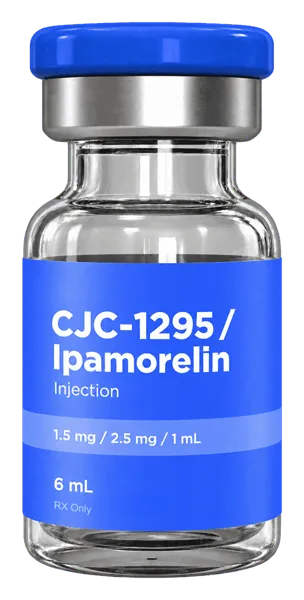
The choice usually comes down to history, mechanism and availability rather than any head-to-head result, because no study has compared the two directly. Sermorelin’s appeal is its track record: nearly two decades on the US market as Geref (1990 to 2008), including a 1997 approval for children with GH deficiency, plus several small adult studies (Federal Register, 2013; Vittone et al., 1997). Ipamorelin’s appeal is selectivity, the clean hormone profile seen in animals (Raun et al., 1998), a trait one widely shared post on X cited when recommending it. Availability differs as well: sermorelin is not sold at Bodybuilding Peptides, and ipamorelin is sold there only in blends, with CJC-1295 or with tesamorelin; the offer on this page is the CJC-1295 blend. A 2026 sports medicine review adds one more factor to weigh: it discusses the placebo effect as a driver of how well peptides seem to work, and how social media amplifies that effect (Mendias & Awan, 2026).
What is the community saying about sermorelin and ipamorelin?
We have no dedicated Community Insights summary for sermorelin, but it comes up in our summaries of public posts on X about ipamorelin (16 posts, July 15 to 16, 2026) and CJC-1295 (17 posts, July 13 to 19, 2026). These are anecdotes and opinions, not evidence.
- GHRH vs GHRP. Posters split GH secretagogues into GHRH compounds and pulse-amplifying GHRPs, and place ipamorelin in the second group as a ghrelin mimetic. That user shorthand matches the receptor research above.
- Ipamorelin as a starting point. One widely shared post frames ipamorelin as a beginner-friendly first GH peptide with what posters call a clean side-effect profile; that is opinion, not consensus.
- Weighing them on cost. Commenters group sermorelin with ipamorelin, CJC-1295, tesamorelin and MK-677 when debating which are worth the money.
- The tier list. One shared ranking put sermorelin in the same tier as CJC-1295 and ipamorelin, below growth hormone itself and tesamorelin.
- Concerns. Posters raise insulin resistance, high IGF-1 and worse sleep with GH peptides, and disagree about how serious those risks are.
So which is it: ipamorelin or sermorelin?
The evidence cannot crown either one for building muscle, because neither has been tested for it in lifters. What genuinely differs is the pathway and the paper trail: sermorelin is an older GHRH fragment with a real pediatric record and mixed results in small studies of older adults, while ipamorelin is a selective ghrelin mimetic with clean animal data, one small hormone study in men and one negative clinical trial. What does not differ is the part that matters most for a tested athlete: both are banned at all times. If your goal is physique, weigh either against those facts and talk it through with a clinician who knows your labs, since both act on the body’s growth hormone system. For the access side of the choice, PeptideAgent’s sermorelin vs ipamorelin comparison sets out the legal status of each, with sources.
Status (ipamorelin): Not FDA-approved; sold by some telehealth providers as a compounded prescription. What this status means.
Educational information only, not medical advice. Every efficacy and safety statement on this page is sourced to the peer-reviewed literature or Federal Register notice linked above, and the sport statement to the WADA Prohibited List; the community summary reflects public posts on X analyzed in July 2026. Updated October 12, 2026. This page is drafted with AI assistance and fact-checked against the cited primary sources before publication.
Sources (11)
Advertising disclosure: links marked "Paid link" go to Bodybuilding Peptides (trybbpeptides.com), an affiliate destination, and Recomp Lab may earn a commission if you buy there. Our coverage is independent of that relationship, and nothing on this page is medical or legal advice.
 See it at Bodybuilding Peptides