Tesamorelin side effects: what the label lists, what lifters report, and the cancer question

The short answer
Tesamorelin's side effects are well documented because it is an approved drug, Egrifta. In trials the most common were injection-site reactions, joint pain, limb pain, swelling, muscle aches and tingling, plus more new diabetes-range blood sugar than placebo. No trial has shown it causes cancer, but the label bars use with active cancer because it raises growth hormone and IGF-1.
Tesamorelin has an unusual place in the gym-floor peptide conversation: it is the one growth-hormone peptide lifters talk about that is currently an FDA-approved prescription drug. That matters for side effects, because it means there is a real label, written from randomized trials with hundreds of patients, instead of a forum thread and a vendor page. This guide reads the side-effect section of that label line by line, sets it beside the smaller trials that followed, and then compares it with what people in the physique community actually say. It ends with the question that keeps coming up in comments: can tesamorelin cause cancer?
What is tesamorelin?
Tesamorelin is a synthetic version of growth hormone-releasing hormone (GHRH), the hypothalamic signal that tells the pituitary gland to release growth hormone. It is the full 44-amino-acid human GHRH sequence with a small six-carbon (hexenoyl) group attached at one end, and it raises the body’s own growth hormone, which in turn raises IGF-1 (Egrifta WR label, DailyMed). It is sold as a prescription medicine under the brand Egrifta, and its only labeled use is reducing excess abdominal fat in adults with HIV and lipodystrophy. The label adds that it is not indicated for weight loss, because its effect on body weight is neutral.
Why do lifters use tesamorelin?
Lifters use tesamorelin mainly because it is the most studied way to nudge their own growth hormone upward, and because it reduced deep belly fat in its trials. The physique interest centers on leaning out the midsection, recovery and holding muscle, usually framed as a gentler route than injecting growth hormone itself. A 2026 endocrinology review of growth-hormone peptides describes exactly this: in fitness circles tesamorelin “is frequently positioned as a tool for improving body composition” and recovery (Dominikowski et al., 2026). The same review cautions that these claims go beyond what the trials measured and should be presented as marketing narratives rather than established clinical effects.
What does the research on tesamorelin show?
The evidence level for tesamorelin is “approved drug, labeled use”: several randomized, placebo-controlled trials with hundreds of adults with HIV, which is far more than any other peptide in this space. In the first phase 3 trial, 412 patients injected 2 mg or placebo daily for 26 weeks; visceral fat fell 15.2% on tesamorelin and rose 5.0% on placebo, and IGF-1 rose 81% (Falutz et al., 2007). A pooled analysis of both phase 3 trials (806 patients) confirmed the fat result and found it held to 52 weeks with continued use (Falutz et al., 2010), and when patients stopped, the fat came back (Falutz et al., 2008). For healthy lifters using it off-label, there are no outcome trials, only a two-week hormone study in 13 healthy men (Stanley et al., 2011). Whether it builds muscle is a separate question, and our page on realistic expectations and side effects for GH peptides covers the wider growth-hormone evidence.
What side effects does the Egrifta label list?
The Egrifta label lists injection-site reactions, joint pain, pain in the arms or legs, peripheral swelling, muscle aches and tingling or numbness as the side effects that were more common than placebo. Those figures come from 543 patients on tesamorelin and 263 on placebo during the first 26 weeks of the trials (Egrifta WR label, DailyMed). The table below reproduces the label’s most common rows, so you can see how much of each effect was the drug and how much was background.
| Attribute | Tesamorelin (n = 543) | Placebo (n = 263) |
|---|---|---|
| Injection-site reaction (redness, itching, pain, swelling) | 17% | 6% |
| Arthralgia (joint pain) | 13% | 11% |
| Pain in extremity | 6% | 5% |
| Myalgia (muscle aches) | 6% | 2% |
| Peripheral edema (swelling) | 6% | 2% |
| Paresthesia (tingling) | 5% | 2% |
| Hypoesthesia (numbness) | 4% | 2% |
| Rash | 4% | 2% |
| Carpal tunnel syndrome | 1% | 0% |
Two things stand out when you read the table honestly. First, joint pain was common on placebo too, so the drug’s share of it is smaller than forum posts suggest. Second, the effects that clearly separated from placebo (swelling, muscle aches, tingling, injection-site reactions) are the classic signature of more growth hormone, not something unique to tesamorelin. Later, smaller trials found the same pattern: in a six-month study, tingling was reported by 21% on tesamorelin versus 5% on placebo, and two patients had their dose lowered because of it (Stanley et al., 2014).
Does tesamorelin cause joint pain and water retention?
Yes, fluid retention is a labeled warning, and the label ties joint pain, swelling and carpal tunnel symptoms to it. The label says fluid retention is thought to be related to tesamorelin’s boost to growth hormone, that it shows up as increased tissue turgor and musculoskeletal discomfort, and that these effects are either transient or resolve when the drug is stopped (Egrifta WR label, DailyMed). The 2026 review notes that tesamorelin is the only peptide in its class where these fluid-retention effects are documented in peer-reviewed human studies (Dominikowski et al., 2026). That is a mark of how well it has been studied, not a sign that the others are free of it.
Does tesamorelin raise blood sugar?
Tesamorelin can raise blood sugar, and the label lists glucose intolerance or diabetes as a warning. In the trials, 5% of tesamorelin patients versus 1% on placebo reached a diabetes-range HbA1c of 6.5% or more by week 26, a hazard ratio of 3.3; the label advises checking glucose before and during treatment (Egrifta WR label, DailyMed). The published trials themselves reported no clinically meaningful average change in glucose (Falutz et al., 2010), a 12-week trial in 53 people with type 2 diabetes found no change in insulin response or glucose control (Clemmons et al., 2017), and one six-month study saw fasting glucose rise at two weeks before settling (Stanley et al., 2014). The fair reading: on average the effect is small, but a minority of people move into a worse range, which is why monitoring is on the label.
What else is on the label?
Beyond the common effects, the label carries a short list of less frequent but more important warnings. These are worth knowing even if you never feel any of the common side effects:
- Raised IGF-1. After 26 weeks, 47% of patients had IGF-1 more than two standard deviations above normal and 36% more than three; the label says the effects of prolonged IGF-1 elevation are unknown and suggests stopping if it stays high.
- Hypersensitivity. Allergic-type reactions (itching, redness, flushing, hives, rash) occurred in 4% of patients.
- Antibodies. About half of patients developed antibodies to tesamorelin, though fat and IGF-1 responses were similar with or without them.
- Critical illness. Because pharmacologic growth hormone has been linked to higher mortality in acute critical illness, the label says to consider stopping tesamorelin in critically ill patients.
- Unknowns. Long-term cardiovascular safety has not been established.
All of these points come from the same label (Egrifta WR label, DailyMed).
Is tesamorelin safe?
Tesamorelin has a better-documented safety record than any other growth-hormone peptide, but “safe” depends on who is using it and how. In its approved population, at the trial dose, it was generally well tolerated over 52 weeks (Falutz et al., 2008), and a 2026 meta-analysis of five randomized trials found no serious side-effect signal (Badran et al., 2026). What that record does not cover is healthy lifters using it for years, at self-chosen doses, often stacked with other compounds; the 2026 review notes that robust long-term safety data are lacking for that kind of unapproved use (Dominikowski et al., 2026). Our network overview of peptide side effects and what the evidence shows puts tesamorelin in that wider context.
Does tesamorelin cause cancer?
No study has shown that tesamorelin causes cancer, but it has not been tested in a way that could rule it out, and the label takes the possibility seriously. The concern is indirect: tesamorelin raises growth hormone and IGF-1, and higher circulating IGF-1 is linked in observational studies to modestly higher risk of some cancers, such as prostate and premenopausal breast cancer (Renehan et al., 2004). For that reason the label contraindicates tesamorelin in active malignancy, asks for careful evaluation after past cancer, and says to stop if cancer recurs; it also notes that lifetime cancer studies in rodents were never done, while standard mutagenicity tests were negative (Egrifta WR label, DailyMed). The 2026 review sums it up as a “biologically plausible but unproven” concern and says it does not establish that any specific peptide causes cancer in humans (Dominikowski et al., 2026).
In plain terms: the risk is theoretical, not demonstrated, and it is most relevant to people with a cancer history, a strong family history or a precancerous condition. The review suggests sustained IGF-1 elevation be treated as a possible risk amplifier in exactly those people, and the honest gap is time: the trials ran for months, not the years over which cancer develops.
Who should not take tesamorelin?
The label names four groups who should not take tesamorelin: people with active cancer, people whose hypothalamic-pituitary axis has been disrupted (for example by pituitary surgery or tumor, hypopituitarism, head irradiation or head trauma), people allergic to tesamorelin or its ingredients, and anyone who is pregnant. Pregnancy is excluded because changing abdominal fat offers no benefit then and could cause fetal harm; in rats, exposure at about two and four times the clinical level led to hydrocephaly in offspring (Egrifta WR label, DailyMed). The label also calls for extra caution in people with diabetes or impaired glucose tolerance (including eye checks for retinopathy), a past history of cancer, or a critical illness, and it is not indicated for children or teens. Competitive athletes are a separate case: tesamorelin is named on the World Anti-Doping Agency’s Prohibited List under S2, growth hormone releasing factors (WADA Prohibited List).
How do tesamorelin’s side effects compare with CJC-1295 and ipamorelin?
Tesamorelin’s side effects are not obviously worse than those of CJC-1295 or ipamorelin; they are simply far better measured. All three raise growth hormone, so fluid retention, joint aches, tingling and blood-sugar effects are plausible across the class (Dominikowski et al., 2026). The difference is the depth of the data: tesamorelin has placebo-controlled side-effect rates from hundreds of patients over up to a year, while CJC-1295 and ipamorelin have small, short trials, as our guide to what CJC-1295 and ipamorelin do explains. The same gap applies to the pre-mixed tesamorelin and ipamorelin blend: no human study has tested the two together, so its side-effect picture is extrapolated from each part.
| Attribute | Tesamorelin | CJC-1295 | Ipamorelin |
|---|---|---|---|
| Mechanism | GHRH analog | Long-acting GHRH analog | Ghrelin-receptor agonist (GH secretagogue) |
| Side-effect evidence | Placebo-controlled rates from hundreds of patients, up to 52 weeks | Ascending-dose hormone trials in healthy adults | A phase 1 study in healthy adults and one proof-of-concept trial in bowel-surgery patients |
| Fluid retention and joint symptoms | Documented and labeled | Plausible from mechanism, not well measured | Plausible from mechanism, not well measured |
| Blood sugar | Labeled warning; 5% vs 1% reached diabetes-range HbA1c | Not characterized long term | Not characterized long term |
| WADA status | Prohibited (S2) | Prohibited (S2) | Prohibited (S2) |
If you are already on testosterone therapy, the added question is how a growth-hormone peptide fits with it; our page on peptides while on TRT covers tesamorelin in that setting.
What does tesamorelin cost?
Cost depends on the route: brand Egrifta is a pharmacy prescription, while compounded or peptide-store tesamorelin is priced separately. We did not verify current Egrifta pharmacy prices, so we do not quote one here. For the storefront linked on this page, Bodybuilding Peptides listed tesamorelin (3 mg/mL, 5 mL vial) at $220 for a one-month plan or $180 per month on a three-month plan when we checked its site on October 12, 2026. Prices change, so treat that as a dated snapshot rather than a current quote.
What the community is saying about tesamorelin
In physique discussion, tesamorelin comes up most often as the benchmark other growth-hormone peptides are measured against, rather than as the subject of detailed side-effect reports. We have no dedicated Community Insights summary for tesamorelin yet, so this section draws on our summaries of public posts on X about CJC-1295 (17 posts, July 13 to 19, 2026) and ipamorelin (16 posts, July 15 to 16, 2026), where tesamorelin was discussed alongside them. These are anecdotes, not evidence.
- The “approved one.” Commenters point out that tesamorelin is the only approved GHRH and describe CJC-1295 as an alternative to it.
- Rankings. One shared tier list put tesamorelin, together with growth hormone itself, in a tier above CJC-1295, ipamorelin and sermorelin.
- Tolerability versus cost. One person said CJC-1295 won on cost but caused sleep problems that tesamorelin did not; others preferred tesamorelin on tolerability.
- Own release versus injected GH. Posters group tesamorelin with CJC-1295 and ipamorelin as peptides that prompt the body’s own growth-hormone release, which they contrast with injecting growth hormone directly. That is user reasoning, not a verified outcome.
Set against the label, the community picture says little about tesamorelin’s own side effects. The broader growth-hormone peptide threads do raise insulin resistance and high IGF-1 as the most cited long-term fears, though posters disagree about how serious they are, and swelling and tingling barely come up. That does not mean those effects are absent in lifters; the posts we analyzed were mostly about rankings and choices, not side-effect tracking, so the label remains the better guide to what to watch for.
The bottom line on tesamorelin side effects
Tesamorelin’s side effects are the most thoroughly documented of any growth-hormone peptide: mostly mild growth-hormone effects (swelling, joint and muscle aches, tingling), injection-site reactions, and a small but real rise in diabetes-range blood sugar. The cancer concern is theoretical and tied to IGF-1, not a demonstrated effect, but the label takes it seriously enough to exclude active cancer. What no study covers is long-term, off-label use by healthy lifters, which is exactly how most people in the gym would use it, so the label’s monitoring points (IGF-1, glucose, swelling) are the sensible ones to discuss with a clinician.
Status (tesamorelin): FDA-approved only as Egrifta, for HIV-related abdominal fat; other uses are off-label. What this status means.
Educational information only, not medical advice. Side-effect figures come from the Egrifta WR prescribing information (DailyMed, revised March 2025) and the peer-reviewed trials and reviews linked above; the community summary reflects public posts on X analyzed in July 2026. Updated October 12, 2026. This page is drafted with AI assistance and checked against the cited primary sources before publication.
Sources (12)
Advertising disclosure: links marked "Paid link" go to Bodybuilding Peptides (trybbpeptides.com), an affiliate destination, and Recomp Lab may earn a commission if you buy there. Our coverage is independent of that relationship, and nothing on this page is medical or legal advice.
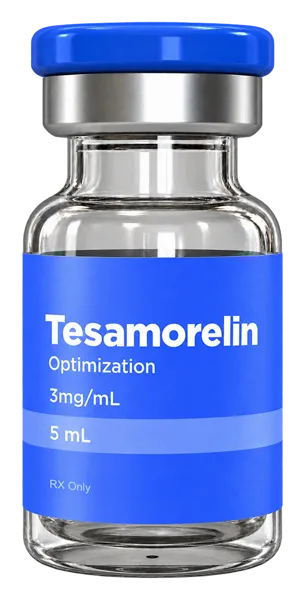 See it at Bodybuilding Peptides