Tesamorelin vs sermorelin: two GHRH analogs, very different track records
The short answer
Tesamorelin and sermorelin are both lab-made versions of growth hormone-releasing hormone, but they are not interchangeable. Tesamorelin is the full 44-amino-acid hormone with a short chemical chain added, approved as Egrifta for HIV-related belly fat and tested in large trials. Sermorelin is a 29-amino-acid fragment, formerly sold as Geref for children's growth, with little adult data.
“Tesamorelin or sermorelin?” gets asked as if the two were brand names for the same thing, and in community posts they get grouped together as “GH secretagogues.” They do share a family: both are synthetic versions of growth hormone-releasing hormone (GHRH), the brain signal that tells the pituitary to release growth hormone (GH). But they are different molecules with very different paper trails. One is a current prescription drug with large randomized trials behind a narrow label; the other is a former children’s drug whose brand was discontinued in 2008 and whose adult data is limited to small studies. This page lays the two side by side on structure, what each was studied for, label history, side effects, sport status and cost, sourced to the primary literature.
What is the difference between tesamorelin and sermorelin?
The core difference is length and one chemical modification: tesamorelin is the full 44-amino-acid GHRH molecule with an added chemical tail, while sermorelin is a shorter 29-amino-acid fragment of the same hormone. The Egrifta SV label describes tesamorelin as “the 44 amino acid sequence of human GRF” with a hexenoyl group (a short six-carbon chain) attached at one end, and notes that in lab testing it binds the GHRH receptor “with similar potency as the endogenous GRF” (Egrifta SV label, DailyMed). Sermorelin is GHRH(1-29), the first 29 amino acids, which was studied in the 1990s as a once-daily injection for children (Thorner et al., 1996). Both work the same way at the receptor: they prompt the pituitary to release more of the body’s own GH, rather than supplying GH directly. Where they split is everything that happened after the chemistry: who they were tested in, for what, and what regulators did with them.
What does tesamorelin do?
Tesamorelin raises the body’s own GH and IGF-1 and, in its approval trials, reduced deep belly fat (visceral fat) in adults with HIV. In the pivotal trial, 412 patients with HIV and excess abdominal fat took tesamorelin or placebo daily for 26 weeks; visceral fat “decreased by 15.2% in the tesamorelin group and increased by 5.0% in the placebo group,” triglycerides fell, and IGF-1 rose by 81% (Falutz et al., NEJM 2007). That is why the current label covers one thing: “reduction of excess abdominal fat in HIV-infected adult patients with lipodystrophy,” with the explicit limit that it is “not indicated for weight loss management” (Egrifta SV label). For the full picture of the drug on its own, see our hub overview of tesamorelin.
What does taking tesamorelin do outside of HIV?
Outside HIV the evidence we cite is one small randomized, double-blind, placebo-controlled trial, and it measured fat and heart-risk markers rather than muscle growth. In 60 adults with abdominal obesity and lower-than-normal GH output, 12 months of tesamorelin reduced visceral fat versus placebo, lowered triglycerides and C-reactive protein, and did not worsen fasting or two-hour glucose (Makimura et al., JCEM 2012). The same study reported a lean body mass change of 1.0 kg with tesamorelin against a 0.4 kg loss with placebo, a net difference of 1.4 kg, while body weight did not change. That lean-mass number is the closest thing to a physique signal in the tesamorelin literature, and it comes from a fat-loss study in people with obesity, not from trained lifters.
What was sermorelin studied and approved for?
Sermorelin was developed for children, not for adults or physique. Under the brand Geref it held two FDA approvals: one as a test of whether the pituitary can secrete GH (approved December 28, 1990) and one for “idiopathic growth hormone deficiency (GHD) in children with growth failure” (approved September 26, 1997) (Federal Register, 2013). In the Geref International Study Group’s open-label trial (no placebo group), 110 previously untreated prepubertal GH-deficient children took it nightly for up to a year; among the 86 analyzed for efficacy, average growth speed rose from 4.1 cm per year to 8.0 cm per year at six months and 7.2 cm per year at 12 months (Thorner et al., 1996). A later review judged it effective “in some prepubertal children” with idiopathic GH deficiency, and noted it had not been compared head to head with growth hormone itself (somatropin) at the recommended regimen, though in the comparisons available its height gains were smaller than with daily somatropin (Prakash & Goa, 1999).
The maker discontinued Geref in 2008, both approvals were withdrawn effective June 18, 2009, and a later FDA notice found the products “were not withdrawn from sale for reasons of safety or effectiveness” (Federal Register, 2013). In plain terms, the brand left the market for reasons other than safety or effectiveness. Our sister site covers the Geref story from a women’s health angle in sermorelin for women: what to know.
What does the adult research on sermorelin show?
The adult evidence for sermorelin is small human studies, and the body-composition study we cite found no change. In a before-and-after study of 11 healthy, non-obese men aged 64 to 76 with low baseline IGF-1, six weeks of nightly GHRH(1-29) injections increased nighttime GH release but produced “no change in GH pulse frequency or in levels of IGF-I,” and did not change weight, waist-to-hip ratio or DEXA measures of muscle and fat (Vittone et al., 1997). Two of six strength measures and one endurance test improved; the authors wrote that treatment “may increase muscle strength” and concluded single nightly doses were “less effective than multiple daily doses.” Put next to tesamorelin’s randomized trials in hundreds of adults, the gap in evidence is the single biggest difference between the two.
How do the side effects of tesamorelin and sermorelin compare?
Tesamorelin’s side effects are well documented because it went through large trials and carries a label; sermorelin’s adult safety data is thin. The Egrifta SV label lists the most common reactions as joint pain, injection-site redness and itching, pain in the arms or legs, swelling in the lower legs and muscle aches, and warns about fluid retention, glucose intolerance and hypersensitivity reactions; in trials, patients on tesamorelin had a higher rate of developing diabetes-range HbA1c than placebo (5% versus 1%) (Egrifta SV label). The label also says active cancer must be treated and inactive before starting, and that the drug is contraindicated in pregnancy. For sermorelin, a review of the pediatric data found transient facial flushing and injection-site pain were the most commonly reported adverse events (Prakash & Goa, 1999); the pediatric trial reported no change in fasting glucose and described it as “well tolerated” (Thorner et al., 1996), and the six-week study in older men reported no significant adverse effects (Vittone et al., 1997). Fewer reported side effects for sermorelin mostly reflects fewer and smaller studies, not a proven cleaner profile. Our page on GH peptide side effects and realistic expectations covers the GH-related effects shared by this whole class.
Tesamorelin vs sermorelin, side by side
The table lines up the two molecules on the points that actually separate them. Read it as a map of the evidence, not a ranking: we found no trial of either in healthy lifters with muscle or strength as the main outcome.
| Attribute | Tesamorelin | Sermorelin |
|---|---|---|
| Structure | Full 44-amino-acid GHRH with a hexenoyl group added | 29-amino-acid fragment of GHRH, GHRH(1-29) |
| Receptor | GHRH receptor | GHRH receptor |
| Main population studied | Adults with HIV and excess belly fat; one trial in adults with obesity | Children with GH deficiency; a small 6-week study in older men |
| Headline research finding | Visceral fat down 15.2% vs up 5.0% on placebo over 26 weeks | Children’s growth speed rose from 4.1 to 7.2 cm per year at 12 months |
| Evidence level in adults | Large randomized placebo-controlled trials (approved drug, labeled use) | Small human studies; a 6-week study in older men found no change in body composition |
| Label history | Approved as Egrifta for HIV-related abdominal fat | Approved as Geref (1990, 1997); discontinued in 2008, approvals withdrawn in 2009, not for safety or effectiveness reasons |
| Common side effects on record | Joint pain, injection-site reactions, swelling, muscle aches; higher glucose risk | Flushing and injection-site pain most reported in children; well tolerated in small studies; limited adult data |
| Human muscle-growth trials in lifters | No | No |
| WADA status (sport) | Prohibited at all times (S2) | Prohibited at all times (S2) |
Where does ipamorelin fit in “tesamorelin vs sermorelin vs ipamorelin”?
Ipamorelin is the odd one out in that three-way comparison, because it is not a GHRH analog at all. It acts on a separate receptor, the ghrelin (growth hormone secretagogue) receptor, and its founding research, done in rat pituitary cells, rats and pigs rather than people, described it as “the first GHRP-receptor agonist with a selectivity for GH release similar to that displayed by GHRH” (Raun et al., 1998). Tesamorelin and sermorelin press the same button in different shapes; ipamorelin presses a different button. That is the same logic behind pairing a GHRH analog with a ghrelin mimetic, which we unpack in CJC-1295 vs ipamorelin. Each two-way matchup has its own page: tesamorelin vs ipamorelin and ipamorelin vs sermorelin. Oral MK-677 (ibutamoren) sits in the same growth hormone secretagogue group as ipamorelin on the WADA Prohibited List (WADA), covered in MK-677 vs GH peptides.
Why do people pick one over the other?
The choice usually comes down to evidence depth, availability and goal, and the record points in a clear direction on each. Tesamorelin has the stronger case for one specific outcome, visceral fat, backed by randomized trials and a current label (Falutz et al., 2007; Makimura et al., 2012). Sermorelin has a long pediatric history, but its adult body-composition data, from one small six-week study, showed no change in muscle or fat (Vittone et al., 1997). Availability differs too: the Geref brand was discontinued in 2008 (Federal Register, 2013), while tesamorelin is a current prescription drug as Egrifta and is also sold by other sellers. For how both fit into the wider GH-peptide landscape, see our guide to growth hormone peptides for physique.
What does tesamorelin cost compared with sermorelin?
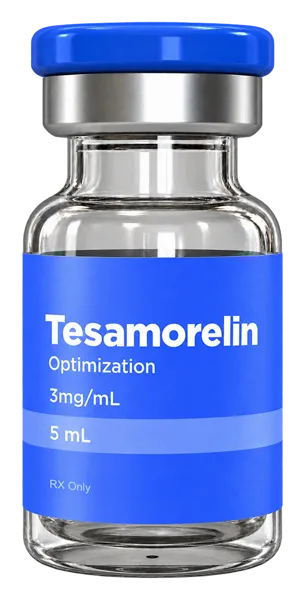
Tesamorelin’s price depends on where it comes from, and sermorelin has no price we can verify for this page. Bodybuilding Peptides lists tesamorelin at $220 for a one-month plan or $180 per month on a three-month plan (site prices checked October 12, 2026); Egrifta, the branded prescription, is priced separately, and we have not verified a pharmacy price for this page. Sermorelin is not sold at Bodybuilding Peptides, so this page links tesamorelin only.
Are tesamorelin and sermorelin allowed in sport?
No, both are banned in tested sport at all times. The WADA Prohibited List names “growth hormone-releasing hormone (GHRH) and its analogues,” listing sermorelin and tesamorelin by name in category S2, which applies in and out of competition (WADA Prohibited List). On this question the two are identical, and the same section covers CJC-1295 and ipamorelin.
What is the community saying about tesamorelin and sermorelin?
We have no dedicated Community Insights summary for tesamorelin or sermorelin yet, but both come up in our summaries of public posts on X about CJC-1295 (17 posts) and ipamorelin (16 posts), analyzed in July 2026. These are anecdotes, not evidence.
- One family, not interchangeable. Commenters group sermorelin and tesamorelin with CJC-1295 and ipamorelin under the label “GH secretagogues,” and weigh them against each other on cost.
- The ranking. One shared tier list put tesamorelin, together with growth hormone itself, above CJC-1295, ipamorelin and sermorelin.
- The “approved one.” Users note that tesamorelin is the only approved GHRH analog.
That ranking lines up with the evidence gap described above, though a tier list is opinion, not data.
So which is it: tesamorelin or sermorelin?
The honest answer is that they are not two versions of one product, and the evidence cannot crown either one for building muscle. Tesamorelin is the better-studied molecule, with randomized trials showing reduced visceral fat and a current label for one narrow use. Sermorelin is a shorter fragment with a real pediatric history and a thin adult record that showed no body-composition change. If your goal is physique, weigh either against those facts and talk it through with a clinician who knows your labs, since both act on the body’s growth hormone system and both are banned in tested sport. PeptideAgent’s side-by-side of the two also favors tesamorelin on evidence, and likewise finds neither proven for fat loss or anti-aging in people without HIV.
Status (tesamorelin): FDA-approved only as Egrifta, for HIV-related abdominal fat; other uses are off-label. What this status means.
Educational information only, not medical advice. Every efficacy and safety statement on this page is sourced to the drug label, peer-reviewed literature or Federal Register notice linked above, and the sport statement to the WADA Prohibited List. Prices are from Bodybuilding Peptides’ site, checked October 12, 2026. Updated October 12, 2026. This page is drafted with AI assistance and fact-checked against the cited primary sources before publication.
Sources (9)
Advertising disclosure: links marked "Paid link" go to Bodybuilding Peptides (trybbpeptides.com), an affiliate destination, and Recomp Lab may earn a commission if you buy there. Our coverage is independent of that relationship, and nothing on this page is medical or legal advice.
 See it at Bodybuilding Peptides